

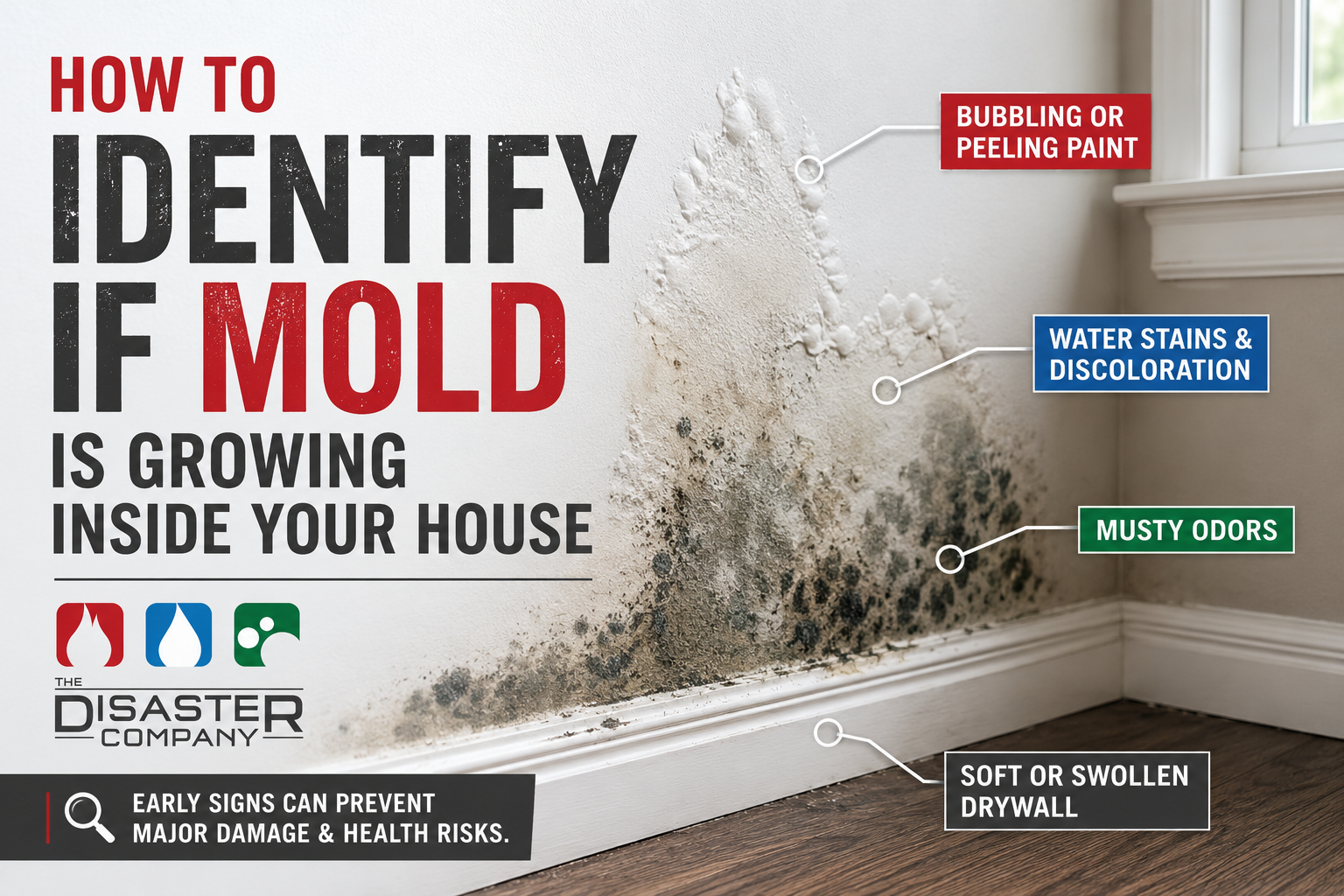
How to Identify if Mold Is Growing Inside Your House
Mold is one of those home problems that can stay hidden until it becomes expensive. It can grow behind walls, under flooring, inside cabinets, around windows, and in areas where water damage was never fully dried. The scary part is that by the time you see visible mold, the moisture problem may have already been active for days, weeks, or longer.
If you suspect mold in your home, the goal is not to panic. The goal is to slow down, look for the right clues, and understand when it is time to bring in a professional. Mold needs moisture to grow, so the real question is usually this: where is water or humidity getting into materials that should be dry?
Table of Contents
ToggleWhy Mold Inside a House Is a Bigger Deal Than It Looks
Mold is not just a cosmetic issue. If it is growing inside your home, there is almost always a moisture source feeding it. That moisture can damage drywall, insulation, wood framing, flooring, cabinets, and trim. In some cases, the surface may look mostly normal while the backside of the material is damp and actively supporting mold growth.
After water damage, timing matters. FEMA warns that mold colonies can start growing on damp surfaces within 24 to 48 hours. The EPA also recommends drying wet or damp items quickly because mold is less likely to grow when materials are dried within 24 to 48 hours.
1. Look for Bubbles, Ripples, or Peeling Paint
Bubbling or rippling paint is one of the most common warning signs that moisture may be trapped behind the wall. Paint is designed to sit flat against a dry surface. When moisture gets behind it, the paint can separate, blister, peel, or wrinkle.
This does not automatically mean mold is present, but it does mean the area deserves attention. If the wall has been damp long enough, mold can grow behind the paint, behind the drywall paper, or on the backside of the drywall where you cannot see it.
Watch for:
- Paint bubbles near ceilings, baseboards, windows, or plumbing walls
- Ripples or waves in painted drywall
- Peeling paint in bathrooms, basements, laundry rooms, or utility rooms
- Paint that feels soft or loose when lightly pressed
Common causes:
- Roof leaks
- Pipe leaks inside walls
- Condensation around windows
- Bathroom humidity
- Past flooding or water damage that was not fully dried
2. Check for Soft, Swollen, or Spongy Drywall
Drywall should feel firm. If it feels soft, swollen, crumbly, or spongy, that is a strong sign the material has absorbed moisture. Once drywall gets wet, it can hold water inside the paper and gypsum core, creating the conditions mold needs to grow.
Pay close attention to walls near bathrooms, kitchens, water heaters, washing machines, basement corners, and exterior walls. If the drywall flexes, crumbles, or dents easily, it may need to be professionally inspected.
3. Take Any Past Leak History Seriously
A past leak is one of the biggest clues when trying to identify hidden mold. Even if the leak was fixed, the materials around it may not have been fully dried. Homeowners often dry the visible surface but miss moisture inside walls, under flooring, behind cabinets, or inside insulation.
Mold risk is higher if the home has had:
- A roof leak
- A plumbing leak inside a wall
- A basement flood
- A water heater leak
- A dishwasher, fridge, or washing machine leak
- A toilet overflow
- Repeated window condensation
- A previous restoration job that did not include proper moisture readings
If the leak happened recently, visit our Utah water damage restoration page to learn more about drying and cleanup. If the home experienced standing water or flooding, our flood cleanup and restoration team can help inspect for hidden moisture before mold spreads.
4. Pay Attention to Musty or Earthy Smells
A musty smell is one of the most overlooked signs of hidden mold. You may notice it when you first walk into a room, open a cabinet, enter a basement, or turn on the HVAC system. If the smell keeps coming back after cleaning, candles, or air fresheners, it may be coming from moisture-damaged materials.
Musty odors are especially important when paired with water stains, soft drywall, visible discoloration, or a known leak history.
5. Look for Stains, Discoloration, or Dark Spots
Mold can appear black, green, gray, brown, white, or even orange depending on the surface and conditions. Not every stain is mold, but discoloration in a damp area should not be ignored.
Check these areas:
- Bathroom ceilings and walls
- Under sinks
- Behind toilets
- Around window frames
- Basement corners
- Closets on exterior walls
- Attics near roof penetrations
- Crawl spaces and rim joists
- Behind or below appliances that use water
6. Watch for Warped Trim, Baseboards, or Flooring
Moisture often shows up first at the edges of a room. Baseboards may swell, separate from the wall, or develop gaps. Flooring may cup, buckle, lift, or feel uneven. These are signs that water may be moving through the wall, floor system, or subfloor.
If trim or flooring is warped and the area smells musty, mold may be growing behind the finished surface.
7. Check Humidity and Condensation Problems
Mold does not always come from a major flood. Sometimes it comes from chronic humidity. Bathrooms without good ventilation, basements with poor airflow, crawl spaces with moisture intrusion, and homes with repeated window condensation can all develop mold over time.
A simple indoor humidity monitor can help. If indoor humidity is consistently high, the home may be more vulnerable to mold growth. The EPA recommends controlling moisture as the key to mold prevention because mold cannot grow without water.
8. Notice Health Symptoms That Improve When You Leave the House
Health symptoms alone do not prove mold is present, but they can be a clue when combined with moisture problems. The CDC notes that people in damp buildings have reported respiratory symptoms, worsening asthma, allergic rhinitis, and other health concerns.
Symptoms that may be worth paying attention to include:
- Stuffy nose
- Coughing or wheezing
- Burning or itchy eyes
- Sore throat
- Skin irritation
- Asthma or allergy flare-ups
- Symptoms that improve when you leave the home
If someone in the home has asthma, allergies, chronic lung disease, or a compromised immune system, it is worth taking suspected mold more seriously.
What to Do if You Think Mold Is Growing in Your House
Check for active leaks, roof issues, plumbing problems, condensation, or damp materials.
Paint does not fix mold. It can trap the problem behind the surface while moisture continues feeding growth.
Scrubbing, sanding, or cutting into affected materials can spread spores if the area is not contained.
Take photos of staining, bubbling paint, damaged drywall, warped trim, and any visible water damage.
A trained restoration team can use moisture meters, thermal imaging, containment procedures, and proper remediation methods to find and address the problem safely.
When to Call a Mold Remediation Professional
Call a professional if you see visible mold, smell a persistent musty odor, find soft drywall, discover water damage behind walls, or know there was a leak that may not have been fully dried. You should also call if mold appears to cover a large area, keeps coming back, or is located near HVAC systems, crawl spaces, attics, or insulation.
The Disaster Company provides mold removal and remediation in Utah, including mold inspection, moisture source identification, containment, HEPA air filtration, structural drying, antimicrobial treatment, and repair of affected materials.
Final Thoughts
The biggest warning sign of mold is not always visible mold. It is moisture. If you have bubbling paint, soft drywall, musty smells, water stains, warped trim, or a history of leaks, there may be hidden mold growing inside your home.
The sooner you identify the moisture source and inspect the affected materials, the easier it is to prevent the problem from spreading.
Need Help Checking for Mold?
If you suspect mold inside your home, The Disaster Company can inspect the affected area, identify hidden moisture, and recommend the right next step. We serve Salt Lake City, Orem, Ogden, Layton, and communities throughout Utah.
Get a Free InspectionCall 24/7: 801-741-0000
Helpful resources: CDC mold health information, EPA guide to mold and moisture, and FEMA mold and mildew cleanup guidance.