

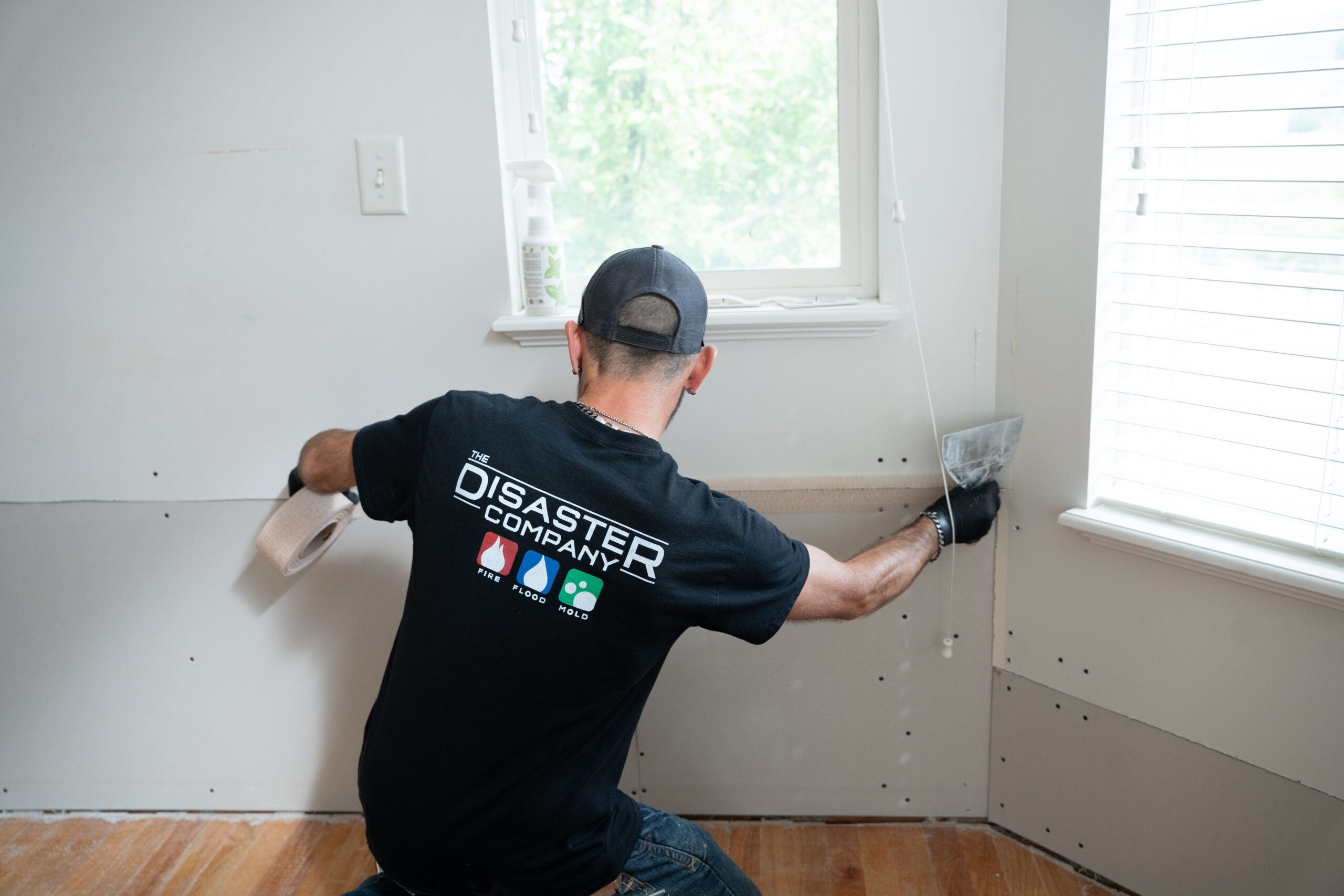
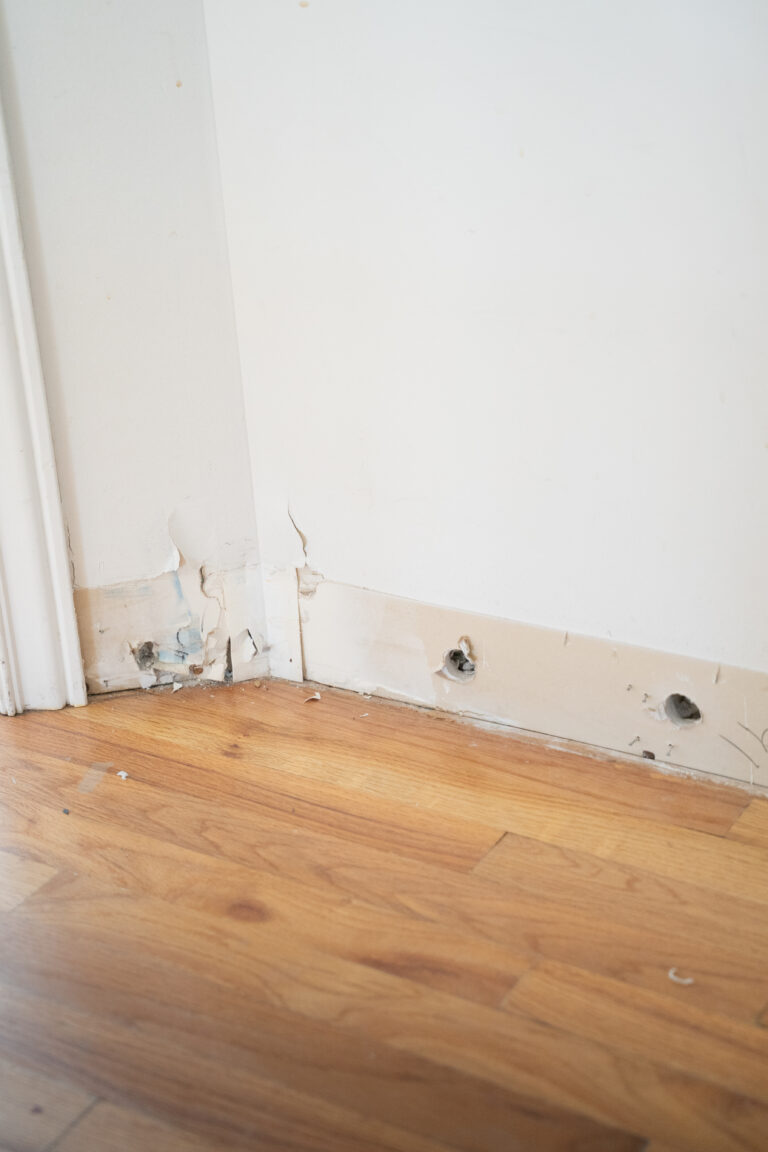
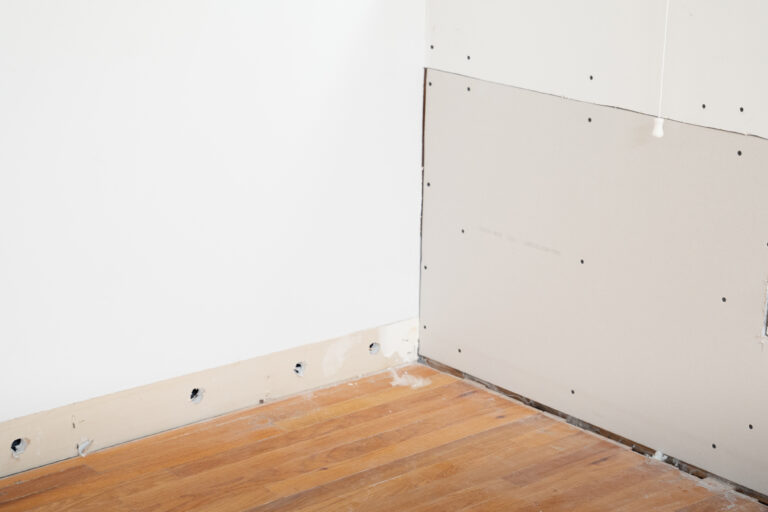
The water gets cleaned up on day one. Then you walk through the house on day two and find a row of holes drilled along the bottom of your walls, the baseboards stacked in a corner, and fans running at every one of them.
It looks like we damaged your house. What we actually did was avoid tearing the walls out.
Here is what those holes are for, why drying a wall from the outside does not work, and what happens to them when the job is finished.
A Wet Wall Does Not Dry on Its Own
When water sits on a floor, drywall soaks it up and wicks it upward. The paper face and the gypsum core both hold water, and so do the framing, the insulation and the bottom plate the wall sits on.
Here is the part that fools people: the surface dries first. You touch the wall a day later and it feels fine. Behind it, the cavity is still saturated, there is no airflow in there at all, and the paint and primer on the outside act like a lid holding the moisture in.
A moisture meter tells a very different story than your hand does. That gap between what a wall feels like and what it actually reads is where mold problems are born.
Mold can begin growing within 24 to 48 hours on wet drywall, insulation and framing. That is the clock we are working against. Every extra day a cavity stays wet is a day closer to materials that have to be removed instead of dried.
Two Ways to Dry a Wall, and Why We Pick This One
Once a wall cavity is wet, there are really only two options.
Option one: cut the wall open
Often called a flood cut, this means cutting the drywall off two to four feet up the entire affected wall, pulling the insulation, and drying the open framing. It works. It is also destructive, it usually means replacing the insulation, and the rebuild afterward is a much bigger job.
Option two: drill and dry the cavity
Instead of removing the wall, we pull the baseboard, drill a line of small holes into the cavity near the floor, and push dry air directly inside. The wall stays where it is. The insulation usually stays where it is. And the holes sit below the line the baseboard covers, so when the baseboard goes back on, the repair disappears.
When a cavity can be dried this way, it is less invasive, less expensive and far quicker to put back than opening the wall up. That is why you see holes instead of missing drywall.
What Is Actually Happening While Those Fans Run
Air movers alone do not dry a house. They move moisture out of materials and into the air. The equipment that removes it is the dehumidifier, which pulls that moisture out of the air and drains it away. The two work as a pair, and the balance between them is most of the skill in structural drying.
With the holes drilled, that dry air gets forced into the cavity instead of blowing uselessly across a painted surface. Both sides of the drywall, the framing and the bottom plate all get airflow.
The other half of the job is measurement. Drying is not finished when a wall feels dry or when a set number of days has passed. It is finished when the materials read at or near the moisture level of the unaffected materials elsewhere in the home. That means taking readings, writing them down, and coming back to check until the numbers get there.
This is also what your insurance company expects to see. Documented moisture readings over the course of the job show that the structure was actually dried rather than just dried off. If a mold claim comes up later, that record is what demonstrates the work was done properly.
What IICRC Certification Means Here
Restoration has published industry standards, and the body behind them is the IICRC, the Institute of Inspection, Cleaning and Restoration Certification.
Two of those standards govern most of what we do after a flood:
- S500 covers professional water damage restoration: how water losses are categorised, how structures are dried, and when materials can be saved versus removed.
- S520 covers mold remediation: containment, removal and verification when growth has already started.
Technicians carry their own certifications under that framework, including WRT for water damage restoration and AMRT for applied microbial, which is to say mold, remediation. The Disaster Company’s team is IICRC certified.
In practical terms, certification is why a crew drills and dries a cavity rather than guessing, why the readings get documented, and why the decision to remove a material is based on a number rather than on how a wall looks.
Then We Put Your House Back
This is the part homeowners most often do not expect, because plenty of restoration companies dry a house and leave the repairs to somebody else.
Once the cavity reads dry, the holes get patched, taped, textured to match the surrounding wall and painted, and the baseboard goes back on. Done properly, there is no sign anything happened.
Being one company through both halves matters more than it sounds. When the crew that dried the structure is the same crew that closes it up, nobody is arguing about whether the wall was ready, and you are not chasing a second contractor to finish a job the first one started. We handle restoration and rebuild together for exactly that reason.
What to Ask Any Restoration Company
If you are deciding who to let into your home after a water loss, these questions separate the thorough from the fast:
- Are your technicians IICRC certified, and in what?
- Will you take moisture readings, and will I get them in writing?
- How will you decide when the structure is actually dry?
- Are you drying the wall cavity, or only the surface?
- Who repairs the drywall and baseboard afterward, and is that included?
- Do you work directly with my insurance company?
A company that answers those clearly is one that intends to dry your house properly. Vagueness on any of them is worth paying attention to.
The Short Version
The holes are not damage. They are the least destructive way we have to get dry air where the water actually went, and they sit where the baseboard will hide them. The alternative is cutting your walls open.
And when the numbers say the structure is dry, we patch them, texture them, paint them and put your baseboards back.
If you want the bigger picture of what the first couple of days after a loss should look like, we covered it in The First 48 Hours After a Home Disaster.
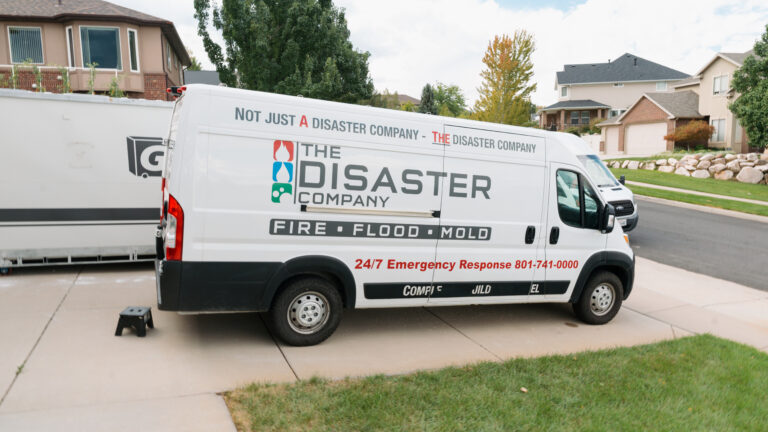
Water Where It Should Not Be?
The first hours decide how much of your home can be saved, and help is available 24/7. The Disaster Company handles water damage restoration, structural drying and mold removal from Ogden and Layton to Salt Lake City and Orem, and carries the job all the way through the rebuild.