


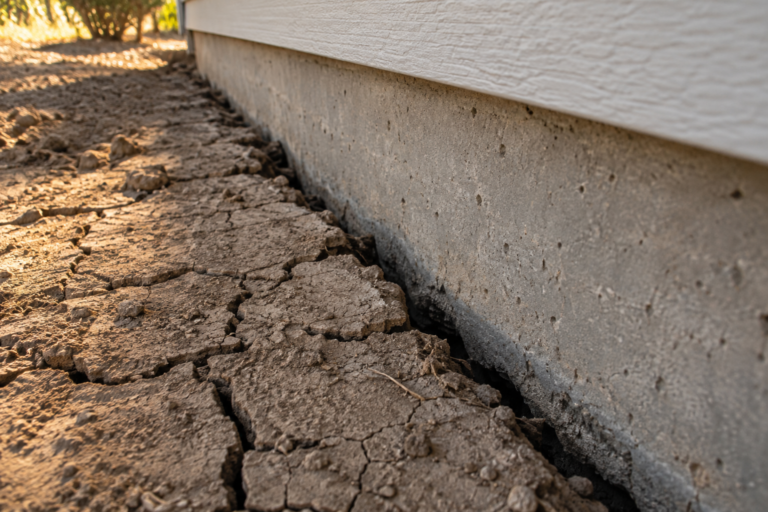
It has not rained in six weeks. The lawn went dormant in July, the flower beds are cracked, and the soil along the side of the house has pulled back from the foundation far enough to fit a finger in the gap. Then one afternoon a storm cell parks over the bench and drops more rain in twenty minutes than the valley saw all month.
Most people assume a drought makes flooding less likely. In a dry Utah year it often works the other way. Ground that has been baked hard does not soak up a sudden downpour. It sheds it, and that water goes looking for the lowest point it can find. On a lot of Utah homes, that point is the basement.
Here is why dry conditions raise your flood risk, where storm water actually gets into Utah homes, and what to do before the next storm rather than after it.
Why Dry Ground Floods Faster Than You Think
Healthy, moist soil works like a sponge. Rain soaks in, spreads out and drains down slowly. Soil that has dried out for weeks behaves very differently: the surface forms a hard crust, and water that lands on it runs off instead of sinking in. During a short, intense storm, a dry yard can shed water almost like a driveway does.
Two other drought effects make it worse right around your house:
- Soil shrinks away from the foundation. Clay-heavy soils contract as they dry, opening a gap along the foundation wall. When heavy rain finally arrives, that gap acts as a funnel, sending water straight down the outside of the wall toward the basement.
- Stressed landscaping holds less water. Dormant grass, thinned ground cover and bare beds slow runoff far less than healthy plants, so water crosses the yard faster and in greater volume.
Utah’s Storm Season Is Built for This Problem
Utah rarely floods from days of steady rain. It floods from short, violent storms. Late-summer monsoon moisture, typically July through September, builds thunderstorms that can drop a large amount of rain on a small area very quickly. A neighborhood a mile away may stay dry while yours takes the full load.
Geography concentrates it. Homes on the benches and near canyon mouths sit below slopes that channel runoff downhill, and a residential street can become a stream for the few minutes a cell passes overhead. Driveways and garages that slope toward the house make it easy for that water to follow. If a storm has already done damage to your roof, siding or yard, our storm damage repair team handles that side too.
If you live below a wildfire burn scar, your risk is higher. Burned slopes lose the vegetation that slows water down, and fire can leave soil water-repellent. Even a moderate storm over a burn area can produce flash flooding and debris flows, and that elevated risk can last for several years after the fire is out.
Where Storm Water Actually Gets Into Utah Homes
Basements are common in Utah, and storm water that ends up indoors almost always arrives through a handful of predictable paths. For the everyday, non-storm causes of water damage, see our guide to the top causes of home water damage in Utah.
Window wells
A basement window well is essentially a pit dug against your foundation. If the drain at the bottom is clogged with leaves and sediment, or there is no drain at all, a heavy storm fills it like a bucket until water pours in around the window. It is one of the most common ways storm water gets into a basement, and one of the easiest to prevent.

The gap along the foundation
The space that opens between dry soil and the foundation wall lets water collect directly against the concrete. From there it finds existing cracks, pipe penetrations, and the joint where the wall meets the basement floor.
Downspouts and grading
A downspout that empties right beside the house dumps an entire section of roof’s worth of water at the foundation. Pair that with a yard that slopes toward the house instead of away from it, and the water has nowhere to go but down.
Sewer and drain backups
Heavy rain can overload sewer and drainage systems, especially where water leaks into aging sewer lines, and push water back up through the lowest drain in the house, usually a basement floor drain. Water that arrives this way is contaminated and should never be cleaned up like clean water.
What to Do Before the Next Storm
The useful thing about a dry year is that it gives you the perfect window to get ready. Everything on this list is easier in dry weather than in the middle of a storm.
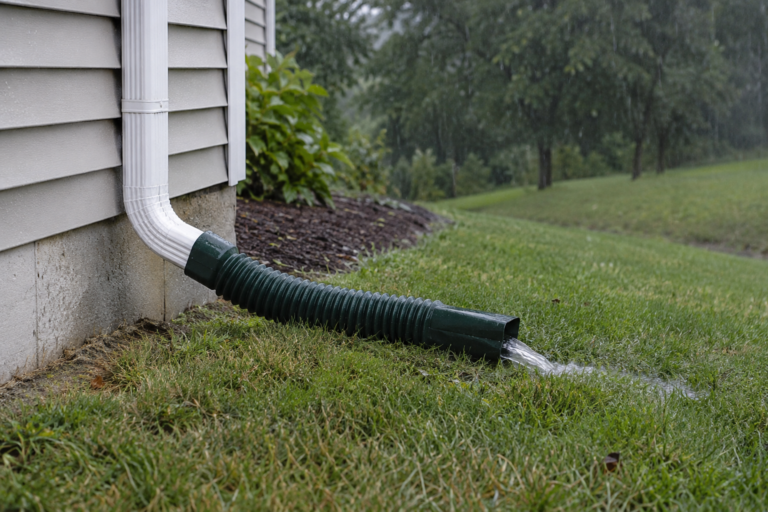
- Clear gutters and extend your downspouts. A dry summer leaves gutters packed with leaves and debris. Extend downspouts so water discharges several feet from the foundation, with four to six feet a common recommendation, onto ground that slopes away.
- Check the grade around the house. Soil should slope away from the foundation on every side. A common standard is roughly six inches of drop over the first ten feet. If settled soil or raised flower beds have created a low spot against the wall, fix it before the rain does.
- Close the gap along the foundation. Where dry soil has pulled away from the wall, backfill the gap with soil and tamp it firm so water sheds away rather than funneling down. Have any foundation crack wider than a hairline evaluated.
- Clean out your window wells. Remove leaves, trash and sediment, and make sure the drain at the bottom is open and flowing. A clear window well cover keeps rain and debris out while still letting light in.
- Test your sump pump. If you have one, pour a bucket of water into the pit and confirm it switches on and discharges away from the house. A battery backup keeps it running when a storm takes out the power, which is exactly when you need it most.
- Clear the storm drain in front of your house. If it is safe to reach, clear leaves and debris from the curb inlet nearest your home. A blocked inlet can back water across your driveway. Never attempt this while water is flowing or during a storm.
- Get valuables off the basement floor. Move documents, photos, electronics and anything irreplaceable onto shelves or upstairs, and keep important papers in waterproof bins.
- Know where your shutoffs are. Everyone in the house should know where the main water shutoff and the electrical panel are before they need them in the dark with water on the floor.
- Record your belongings now. A quick video walk-through of each room, especially the basement, makes an insurance claim dramatically easier if you ever have to file one.

Check your insurance before storm season, not after. Standard homeowners policies generally do not cover flooding from surface water. That usually requires a separate flood policy, and coverage through the National Flood Insurance Program typically has a 30-day waiting period before it takes effect. Sewer and drain backup is often an optional add-on as well. Your agent can tell you exactly what your policy includes.
If Water Gets In Anyway
- Put safety first. Do not walk into a flooded area if the water could be in contact with outlets, cords or appliances. Shut off power at the panel only if you can reach it without standing in water.
- Document before you clean. Take photos and video of the water, the damage and any affected belongings before you move or throw anything away.
- Treat storm water as contaminated. Water that entered from outside or came up through a drain can carry sewage, bacteria and chemicals. Do not handle it without protection, and do not assume a shop vac and a couple of fans will make the space safe.
- Move quickly. Mold can begin growing within 24 to 48 hours on wet drywall, carpet pad and framing. The longer materials stay wet, the more of them have to be removed rather than dried. If you are already seeing or smelling it, our mold removal team can assess it.
We cover the full picture, including drying, insurance and when materials can be saved, in The First 48 Hours After a Home Disaster.
Prepare While It Is Still Dry
The irony of a drought year is that the dry weather is your best chance to get ready. Gutters are easy to clear, window wells are easy to reach, and grading is far easier to fix in dry soil than in mud. An afternoon of work now can be the difference between a storm you barely notice and a basement you have to rebuild.
Storm Water in Your Basement?
If a storm has already pushed water into your home, the first hours matter most, and help is available 24/7. The Disaster Company handles flood cleanup, water extraction, drying and mold prevention from Ogden and Layton to Salt Lake City and Orem, and can carry the project all the way through the rebuild.